Linear Algebra: From Linear Systems to Eigenvalues and Least Squares
A one-semester university introduction to linear algebra. It starts with solving linear systems by row reduction. From there it covers vectors, span, linear independence, matrix transformations, inverses and determinants, vector spaces and bases, eigenvalues and diagonalization, and orthogonality with Gram-Schmidt and least squares. It suits first-time linear algebra students in math, science, engineering or data fields, and anyone who wants proofs and geometric intuition alongside worked computations.
Lessons by Dr. Trefor Bazett on YouTubeCurated by YodaHut. These lessons are hosted on YouTube and produced by their original creators, who are not affiliated with YodaHut. You still earn YodaCoins, keep your streak and track progress here.
What You'll Learn
- Solve linear systems with elementary row operations, reduce to REF/RREF, and describe solution sets with 0, 1 or infinitely many solutions in vector form
- Test whether vectors span a space or are linearly independent, and connect these ideas to the matrix equation Ax=b
- Treat matrices as linear transformations: find the matrix of a transformation, and use matrix multiplication as composition
- Compute matrix inverses and determinants, and decide when a matrix is invertible
- Find bases and dimensions of null space and column space, change coordinates between bases, and apply the rank/dimension theorem
- Compute eigenvalues and eigenvectors (including complex ones), diagonalize matrices, and use diagonalization to compute matrix powers
- Use dot products, orthogonal projections, Gram-Schmidt, and least squares to work with orthogonality
Prerequisites
- High-school algebra and basic coordinate geometry
- Familiarity with functions; basic trigonometry and complex numbers help for the rotation and complex-eigenvalue lessons
Course Curriculum
- 1The Big Idea of Linear Algebra: Course Introduction12:58
- 2What Is a Solution to a Linear System?5:28
- 3Visualizing Solutions to Linear Systems in 2D and 3D8:19
- 4Rewriting a Linear System in Matrix Notation3:10
- 5Solving Linear Systems with Elementary Row Operations7:27
- 6Using Elementary Row Operations to Simplify a System9:35
- 7Systems with 0, 1, or Infinitely Many Solutions6:30
- 8Row Echelon Form and Reduced Row Echelon Form6:41
- 9Back Substitution with Infinitely Many Solutions11:05
- 10The Gaussian Algorithm Visualized13:37
- 11What Is a Vector? Vector Addition and Scalar Multiplication6:40
- 12Linear Combinations and Span9:34
- 13Determining Whether a Vector Is in a Span5:00
- 14Matrix-Vector Multiplication and the Equation Ax=b6:59
- 15Matrix-Vector Multiplication Example4:33
- 16Proving Algebraic Rules: A(b+c) = Ab + Ac8:25
- 17The Big Theorem, Part I14:01
- 18Writing Solutions to Ax=b in Vector Form4:48
- 19Geometric View of Solutions to Ax=b and Ax=06:21
- 20Three Properties of Homogeneous Systems7:53
- 21Linear Dependence and Independence: Geometric View8:16
- 22Determining Linear Independence vs Dependence6:39
- 23Making a Concept Map: Linear Independence7:10
- 24Transformations and Matrix Transformations5:16
- 25Three Examples of Matrix Transformations8:25
- 26Linear Transformations8:28
- 27Matrix Transformations vs Linear Transformations, Part I3:04
- 28The Standard Basis Vectors6:37
- 29Matrix Transformations Are Linear Transformations8:49
- 30Finding the Matrix of a Linear Transformation9:18
- 31One-to-One, Onto, and the Big Theorem Part II9:30
- 32Matrix Multiplication: Motivation and Definition10:12
- 33Computing Matrix Multiplication5:37
- 34Visualizing Composition of Linear Transformations14:00
- 35Elementary Matrices7:20
- 36Matrix Inverses and Solving Equations7:12
- 37Inverses of 2x2 Matrices3:04
- 38Finding the Inverse of a Matrix6:30
- 39When a Matrix Fails to Be Invertible8:45
- 40Visualizing Invertible Transformations8:12
- 41Invertible Matrices and Invertible Transformations: Proof6:38
- 42Determinants and Invertibility9:14
- 43Computing Determinants Along Any Row or Column3:43
- 44Vector Spaces: Definition and Examples8:11
- 45The Vector Space of Polynomials: Span, Independence, Basis12:50
- 46Subspaces: Definition and First Examples6:26
- 47The Span Is a Subspace5:03
- 48Null Space and Column Space of a Matrix10:41
- 49The Basis of a Subspace3:53
- 50Finding a Basis for Null Space and Column Space9:45
- 51Finding a Basis for Col(A) When A Is Not in REF2:37
- 52Coordinate Systems from Non-Standard Bases6:34
- 53Writing Vectors in a New Coordinate System: Example3:52
- 54What Are Grid Lines in Coordinate Systems?5:16
- 55The Dimension of a Subspace5:11
- 56Computing Dimension of Null Space and Column Space3:27
- 57The Dimension Theorem and Rank4:02
- 58Changing Between Two Bases7:55
- 59Visualizing Change of Basis Dynamically7:42
- 60Example: Writing a Vector in a New Basis8:55
- 61Eigenvalues and Eigenvectors Geometrically9:09
- 62Using Determinants to Compute Eigenvalues and Eigenvectors4:36
- 63Example: Computing Eigenvalues and Eigenvectors7:33
- 64Possibilities for Eigenvalues and Eigenvectors9:47
- 65Why Diagonal Matrices Are Easy6:28
- 66How Diagonalization Works7:30
- 67Computing Large Matrix Powers via Diagonalization3:01
- 68Full Example: Diagonalizing a Matrix10:08
- 69Complex Eigenvalues, Eigenvectors and Diagonalization14:10
- 70Visualizing Diagonalization and Eigenbases9:46
- 71Similar Matrices and Their Shared Properties8:47
- 72Similarity as Change of Basis9:59
- 73Dot Products and Length7:23
- 74Distance, Angles, Orthogonality and Pythagoras8:14
- 75Orthogonal Bases4:50
- 76Orthogonal Complements (Orthogonal Decomposition Theorem Part 1)3:57
- 77Orthogonal Projections: Geometric View11:07
- 78Orthogonal Decomposition Theorem Part 211:25
- 79Orthogonal Projections as Minimization7:05
- 80Gram-Schmidt: Orthogonalizing a Basis11:21
- 81Gram-Schmidt: Full Example6:18
- 82Rotation Matrices21:24
- 83Least Squares Approximations7:28
- 84Least Squares as Solving a System5:36
About the Instructor
Dr. Trefor Bazett
YouTube creator
The lessons in this course were produced by Dr. Trefor Bazett and are published on YouTube. YodaHut selected and sequenced them into this course; we did not make them, and Dr. Trefor Bazett is not affiliated with YodaHut.
Visit the channel on YouTubeMore in the Library: Academics

Organic Chemistry: Complete Course from Bonding to Reaction Mechanisms

Linear Algebra for Machine Learning: Vectors, Matrices, Eigenvalues and SVD

Linear Algebra: A Geometric Introduction to Vectors, Matrices and Eigenvalues

Linear Algebra (MIT 18.06): Matrices, Vector Spaces, Eigenvalues and SVD
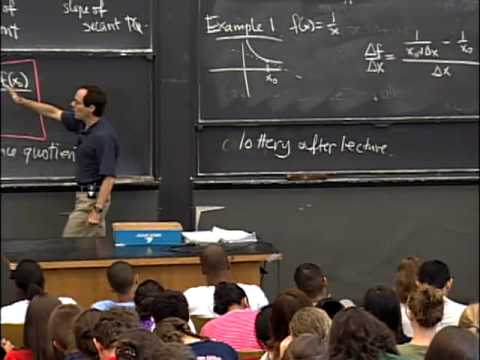
Single Variable Calculus (MIT 18.01): Limits, Derivatives, Integrals and Series

Introductory Statistics and Probability: From Data Collection to Regression

- 84 lessons
- 10h 50m of video
- Earns YodaCoins & streaks
- Timestamped notes
- Free — hosted on YouTube
No certificate is issued for Library courses.